

All articles
 How Does a Fly Catcher Machine Work?
- Glue Board vs Electric-Grid Fly Killers: Which Suits a Food Business?
 Where to Place a Fly Catcher Machine: a Placement and Maintenance Checklist
 Signs of Rats and Mice: How to Tell You Have Rodents
 Bird Spikes vs Bird Netting: Which Suits Your Building?
 Cockroach Monitoring Traps: What They Tell You
Glue Board vs Electric-Grid Fly Killers: Which Suits a Food Business?
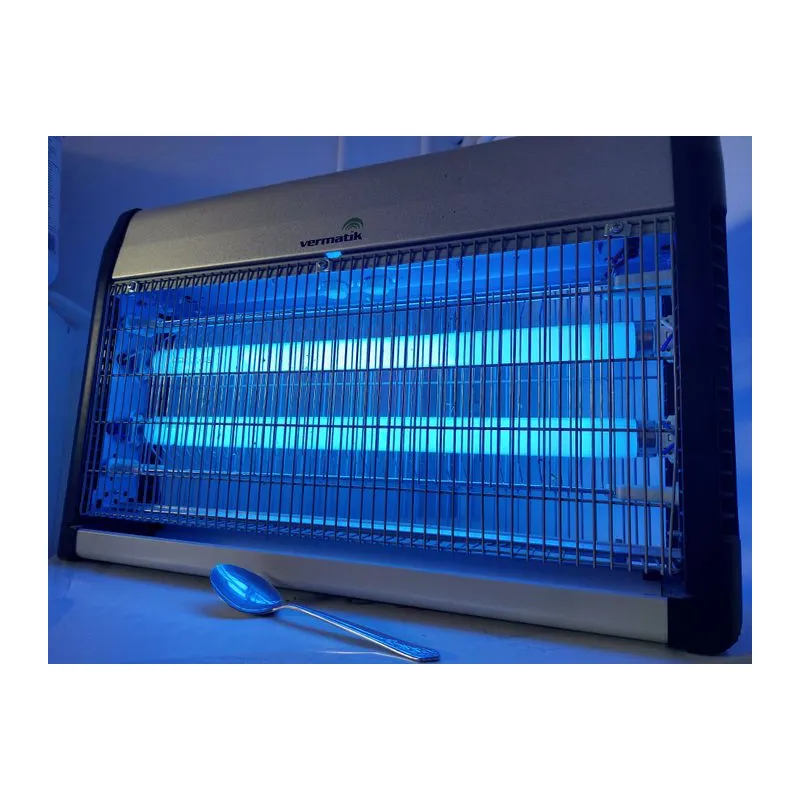
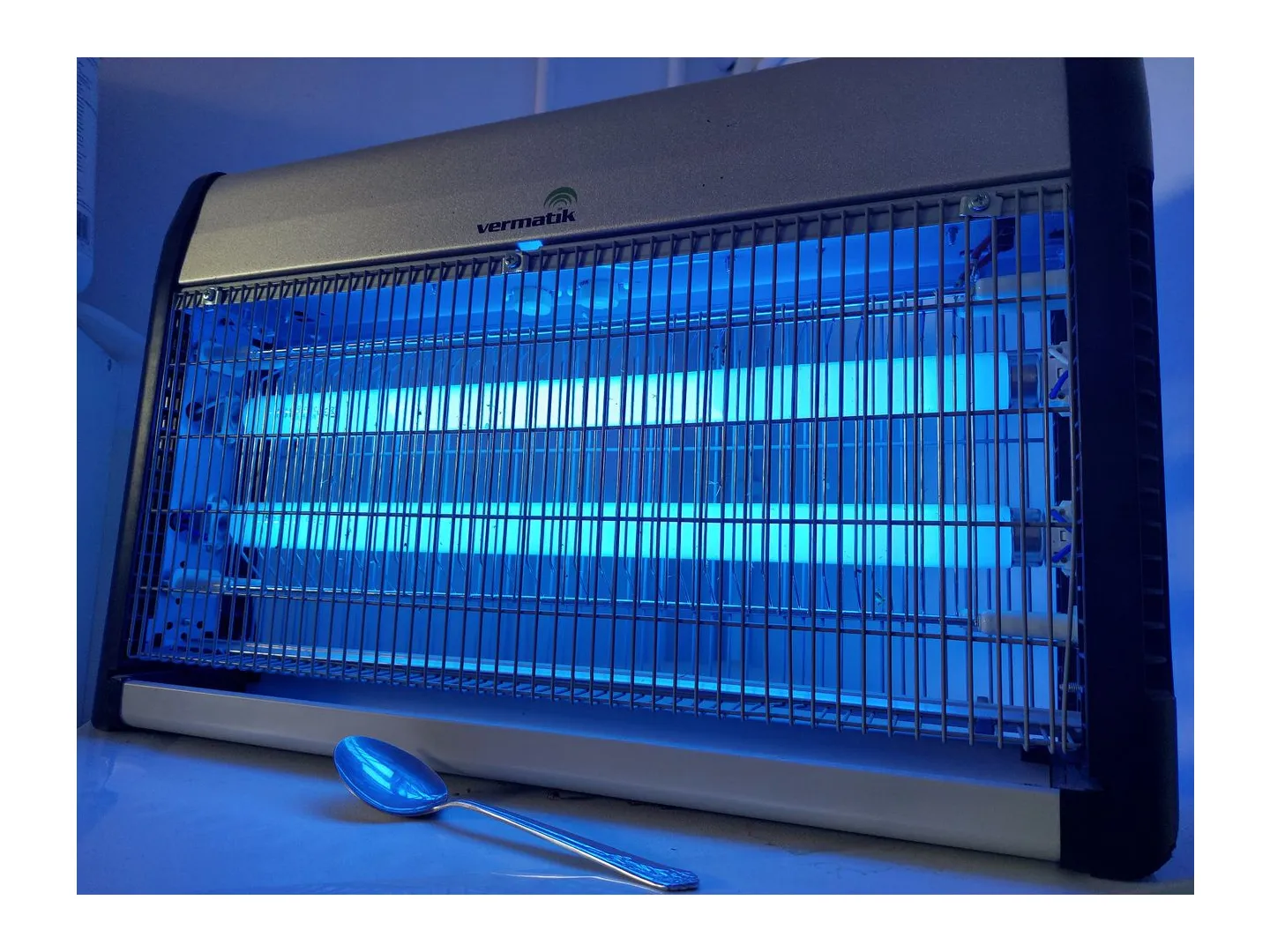
Both types use ultraviolet light to draw flies in. A glue-board unit holds them on a sticky board; an electric-grid unit kills them on a charged grid. For food businesses, glue boards are usually the better fit because insects stay contained and the board doubles as a monitoring record. Grid units can work in back areas away from food, but never above it.
The same lure, a different ending
Every fly unit starts the same way: an ultraviolet lamp draws flying insects towards it. The difference is what happens next, and in a food business that difference matters more than any other feature.
Capture and hygiene
On a glue board, an insect lands and stays. Nothing breaks apart and nothing leaves the unit. On an electric grid, the insect is killed on contact, and larger insects can break up. Fragments can be thrown out of the unit and fall onto whatever is below. Over food, packaging or preparation surfaces that is a contamination risk, which is why grid units are kept well away from them.
Monitoring value
A used glue board is a small piece of evidence. It shows which insects are present, roughly how many, and, compared week by week, whether things are getting better or worse. Food businesses that keep trend records for audits often rely on this. A grid unit’s tray gives far less information, because remains are often broken up and mixed together.
Upkeep
- Glue-board units: the board is changed when full or dusty, or on a set interval, and the unit is wiped down.
- Grid units: the tray is emptied and the grid cleaned, so build-up does not reduce performance or create a smell.
- Both: the light source must keep giving off enough ultraviolet light. Fluorescent tubes fade in attraction before they stop glowing; LED light sources have no tubes to replace but should still be checked.
Noise and appearance
Glue-board units are silent, and designs that hide the board look tidy in customer areas. Grid units make a short sound when they kill an insect and the remains can be visible in the tray, so they are less suited to front-of-house spaces.
Three common mix-ups
- "A grid unit is stronger, so it catches more." Both use the same ultraviolet lure. Placement and upkeep decide how much a unit catches.
- "A glue board is only a backup." In food areas the board is often the main tool, because it keeps insects whole and doubles as a record.
- "One big unit covers everything." Flies travel along routes from entry points. Several well-placed units usually do more than one large unit in the wrong spot.
Where each one fits
| Area | Glue board | Electric grid |
|---|---|---|
| Kitchen, food preparation, packing | Suitable, placed away from open food | Not suitable |
| Dining room, retail floor | Suitable (concealed-board designs) | Usually avoided (noise, visible remains) |
| Stores, corridors, back areas away from food | Suitable | Can be used |
| Where trend records are kept for audits | Preferred | Less useful |
A quick way to decide
- Food is open nearby, or customers can see the unit: choose a glue-board unit.
- You keep catch records for audits: choose a glue-board unit.
- A back area well away from food, with no records needed: either type can work.
- Still unsure: ask for a site visit. The layout usually makes the choice clear.
The PESTGOGO choice
The PESTGOGO EFC catches flying insects on a glue board concealed inside the unit; the EFK kills them. For most food areas we recommend the EFC. Where an EFK fits, we place it away from food lines. Either way, we also look for what is bringing the flies in, because no unit replaces good hygiene and source control.
Frequently Asked Questions
- Can I use an electric-grid fly killer in my kitchen?
- Not above food, food-contact surfaces or preparation areas, because insect fragments can be thrown out of the unit. A glue-board unit is the preferred choice in kitchens.
- Which type catches more flies?
- Both rely on the same ultraviolet lure, so placement, the condition of the light source and upkeep matter more than the capture method.
- Why do auditors like glue boards?
- A used board shows which insects were caught and roughly how many, so it supports trend records over time.
- Are glue-board units more work to maintain?
- Changing a board is quick. Grid units need their trays emptied and grids cleaned instead, so the effort is similar.
- Can I have both types?
- Yes. Many sites use glue-board units near food and in customer areas, and grid units only in back areas well away from food.
- Do glue-board units smell?
- A glue board that is changed on time does not usually cause a smell. Grid units can smell if the tray is left full or the grid is not cleaned.
- Is the noise from a grid unit a problem?
- In a back area, usually not. In a dining room or shop the short crack when an insect is killed can bother customers, which is one reason glue-board units are used there.
- Can a glue-board unit be used in a customer area?
- Yes. Choose a design that hides the board so customers do not see what it has caught.
- What happens to the insects on a used glue board?
- The whole board is removed and thrown away with them, after the catch has been noted if you keep records.
- Which type does PESTGOGO recommend?
- For most food areas, the EFC, which catches insects on a concealed glue board. We place an EFK only where it fits, away from food lines.
Not sure which unit suits your site?
We look at your layout, entry points and food areas, and recommend where glue-board and other units should go.