

All articles
 How Does a Fly Catcher Machine Work?
- Glue Board vs Electric-Grid Fly Killers: Which Suits a Food Business?
 Where to Place a Fly Catcher Machine: a Placement and Maintenance Checklist
 Signs of Rats and Mice: How to Tell You Have Rodents
 Bird Spikes vs Bird Netting: Which Suits Your Building?
 Cockroach Monitoring Traps: What They Tell You
Bird Spikes vs Bird Netting: Which Suits Your Building?
Bird spikes stop pigeons landing on narrow surfaces such as ledges, parapets, signs and pipes. Bird netting closes off whole spaces such as balconies, shafts and courtyards, so birds cannot get in at all. Many buildings need both, fitted after droppings and old nests have been cleared.
Why pigeons keep coming back
Pigeons return to places that give them a flat, sheltered perch close to food and water. A ledge under a window, the top of an AC unit or the gap above a sign can become a regular roosting or nesting spot, and once droppings build up the area stays attractive. Shooing birds away rarely works for long: the place itself has to change.
Bird spikes: for ledges and narrow surfaces
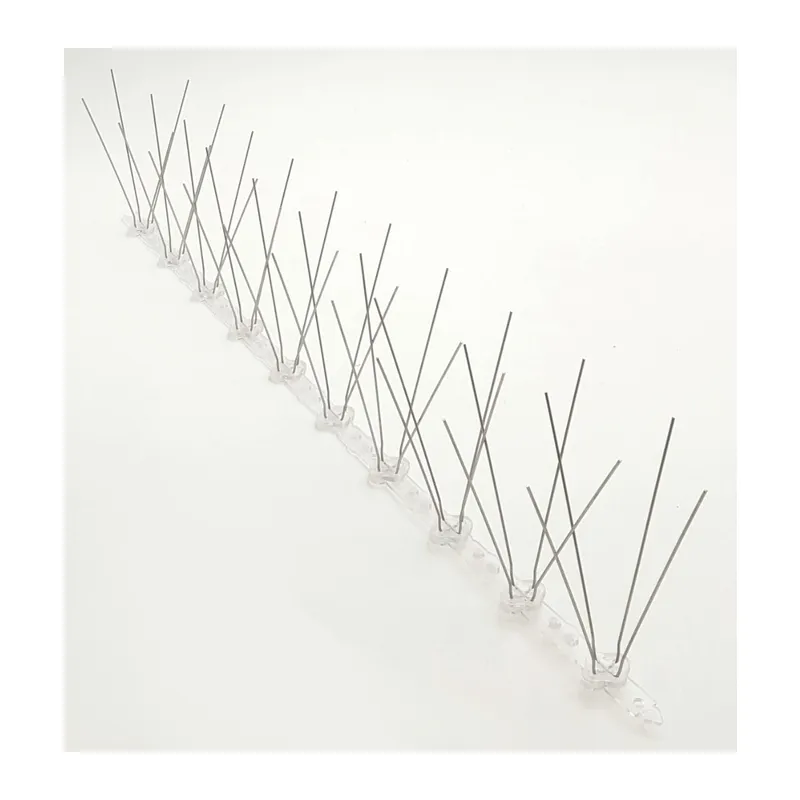
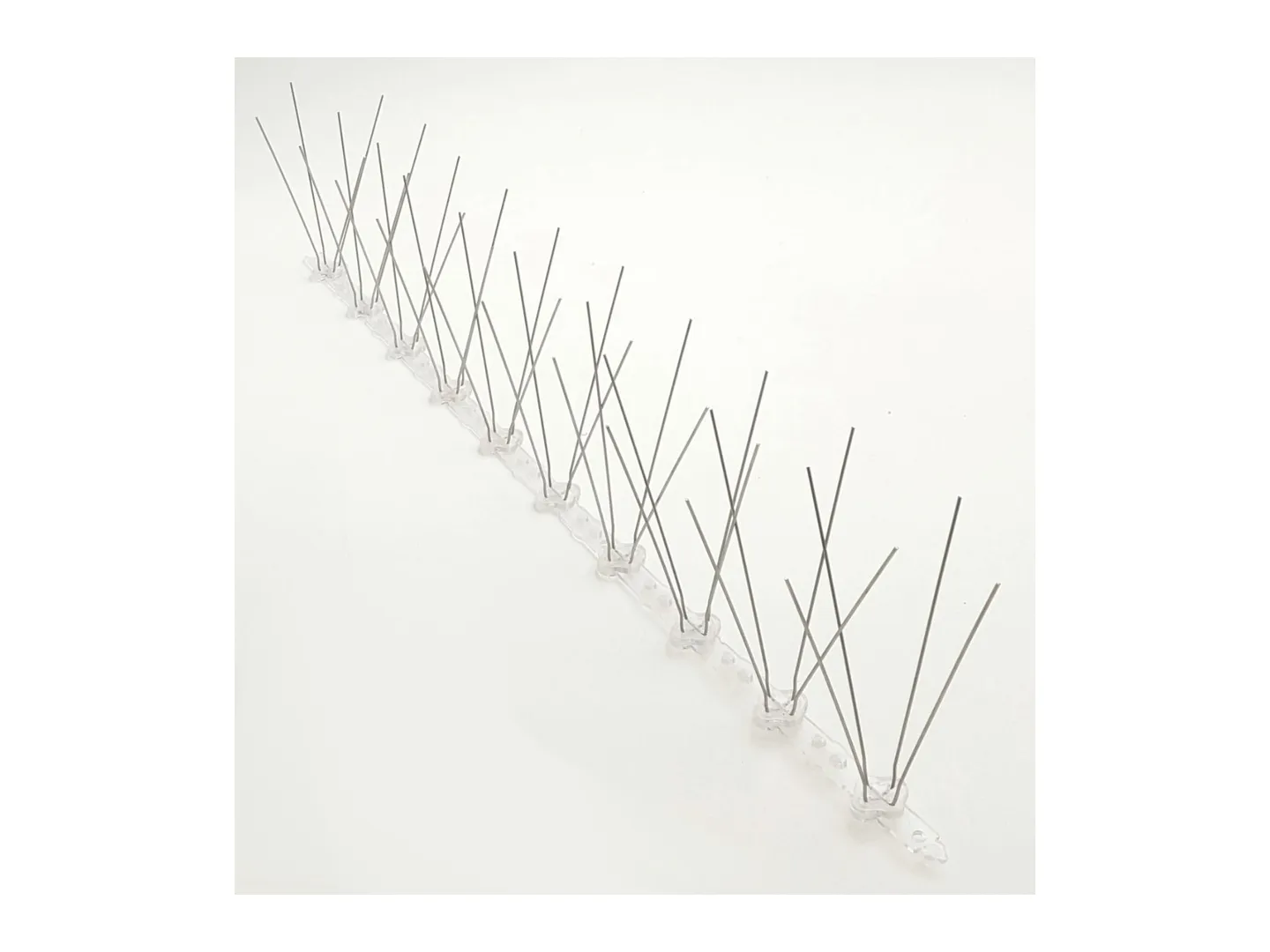
Spikes are strips of upright rods on a base fixed along a surface. They do not trap birds; they make the surface awkward to land on.
- Best for: window ledges, parapet walls, signboards, beams, pipes and the tops of AC units.
- Less suited to: wide flat areas and enclosed spaces, where birds can land beside the strip or get in another way.
- Fitting matters: strips must cover the full width of the ledge, with no gaps at the ends.
- Upkeep: clear leaves and debris caught in the spikes, or birds can use them as a base.
Bird netting: for balconies, shafts and open spaces
Netting is stretched across an opening so birds cannot reach the space behind it.
- Best for: balconies, duct and light shafts, courtyards, warehouse roof spaces and loading bays.
- Less suited to: single ledges, where spikes are simpler.
- Fitting matters: the net must be tensioned and fixed on every side. A loose edge or a small gap lets birds in, and they can then be trapped behind it.
- Upkeep: check for tears and loose fixings, especially after storms.
Spikes and netting side by side
| Point | Bird spikes | Bird netting |
|---|---|---|
| What it does | Stops birds landing on a surface | Stops birds entering a space |
| Typical places | Ledges, parapets, signs, pipes, AC units | Balconies, shafts, courtyards, roof spaces |
| How it looks | Visible strips along the edge | Fine mesh across the opening |
| Main problem if fitted badly | Gaps at the ends of a ledge | Loose edges that let birds in or trap them |
On many buildings the answer is both: netting for balconies and shafts, spikes for the ledges and signs that remain.
Before anything is fitted
- Check for nests, eggs and chicks. Fitting over an active nest traps birds, so wait until it is empty or ask a professional how to handle it.
- Clean droppings and old nesting material from the area, wearing gloves and a mask.
- Check whether you need permission from your housing society or building management, especially for netting on balconies and outer walls.
- Plan how fitters will reach high ledges and shafts; work at height needs the right equipment.
How PESTGOGO handles bird control
Our bird control service starts with a look at where birds perch, roost and nest, then recommends spikes, netting or both for each spot. Spikes and netting are also listed in our product store.
Frequently Asked Questions
- Do bird spikes hurt pigeons?
- Spikes are made to stop birds landing, not to injure them. When they are fitted correctly, birds simply move on to another perch.
- Which is better for a balcony?
- Netting, in most cases. A balcony is an open space birds can fly into, so closing the opening keeps them out. Spikes can be added to a railing or ledge if birds perch there.
- Can I fit bird spikes myself?
- On a low, easy-to-reach ledge, yes. Make sure the strip covers the full width and is fixed firmly. High ledges and outer walls are best left to trained fitters with the right equipment.
- Will netting block light and air?
- Bird netting is an open mesh, so light and air still pass through, although you will see it across the opening.
- How long does bird netting last?
- It depends on the material, the sunlight and the weather. Check it regularly for tears and loose fixings, and repair them early.
- What if pigeons are already nesting?
- Do not fit spikes or netting over an active nest. Wait until it is empty, or ask a professional how to handle it, then clean the area before fitting.
- Why do pigeons come back after cleaning?
- Cleaning removes the droppings but not the perch. Unless the ledge or space is protected with spikes or netting, pigeons return to the same spot.
- Do spikes work on wide ledges?
- Wide ledges need several rows so birds cannot land beside the strip. For very wide or flat areas, netting may suit better.
- Do I need permission to put up netting?
- Often, for outer walls and balconies in apartment buildings. Check with your housing society or building management first.
- Does PESTGOGO fit both spikes and netting?
- Yes. Our bird control service looks at the building and recommends spikes, netting or both, depending on where birds land and nest.
Pigeons on your ledges or balcony?
We look at where birds land and nest, then recommend and fit spikes, netting or both.