

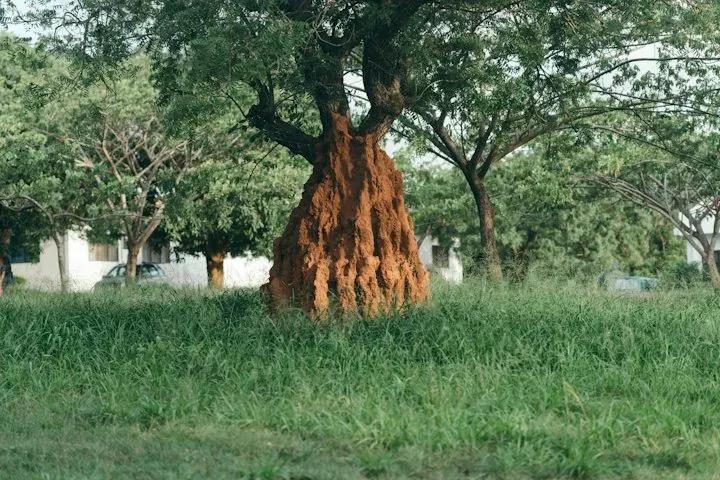
Types of termites
- Subterranean termites
- Live in colonies in the soil and travel into buildings through cracks and mortar joints, building mud tubes as they go.
- Drywood termites
- Get the moisture they need from the air and from the wood they eat, so they nest inside dry wood above ground. They often arrive in infested furniture.
- Dampwood termites
- Nest in damp and decaying wood rather than in soil.
Who does what in a colony
- Workers
- The most numerous and the most destructive. They are white, blind, and find their way with their antennae. They gather food and build the tunnel network.
- Soldiers
- Defend the colony with huge jaws, so large that workers have to feed them. Their main enemy is the ant.
- Winged termites (swarmers)
- Leave the nest to start new colonies. Seeing them near doors and windows is often the first sign people notice.
Termite or ant?
- Termites have a broad waist. Ants have a thin, pinched waist.
- Termite antennae are straight. Ant antennae are bent at a right angle.
- Winged termites have four wings of equal size.
Signs of termites
- Pencil-thin mud tubes running up walls, foundations, skirting or door frames.
- Wood that sounds hollow when tapped, or paint that bubbles or cracks over timber.
- Discarded wings near windows, doors or lights, often after rain.
- Small holes in wood, or fine powdery or pellet-like material near furniture (more typical of drywood termites).
- Doors and windows that suddenly stick, which can have other causes such as humidity.
Where they hide
- Inside door and window frames, skirting and wooden flooring.
- Wardrobes, cupboards and furniture standing against walls.
- False ceilings, wall panelling and behind wooden fixtures.
- Soil around the foundation, garden beds and tree stumps.
What attracts them or lets them in
- Moisture: leaks, seepage, damp walls and poor drainage near the building.
- Wood in contact with soil, and stored timber, cardboard or paper.
- Cracks in floors and walls that give access from the soil.
How to prevent termites
- Fix leaks and seepage, and keep areas around the foundation dry.
- Keep firewood, timber and cardboard off the ground and away from walls.
- Leave a small gap between furniture and damp walls.
- Check door frames, skirting and wardrobes for mud tubes every few months.
- Before buying second-hand wooden furniture, look for holes and powdery residue.
When a professional assessment may help
- You find mud tubes or hollow-sounding wood anywhere in the home.
- Winged termites appear indoors.
- You are renovating or building and want treatment before floors are laid.
- Damage may affect structural timber, frames or valuable furniture.
Did you know?
- Termites can make snapping or popping sounds that are easiest to hear at night.
- Damage is often found first in false ceilings, door frames and wardrobes.