

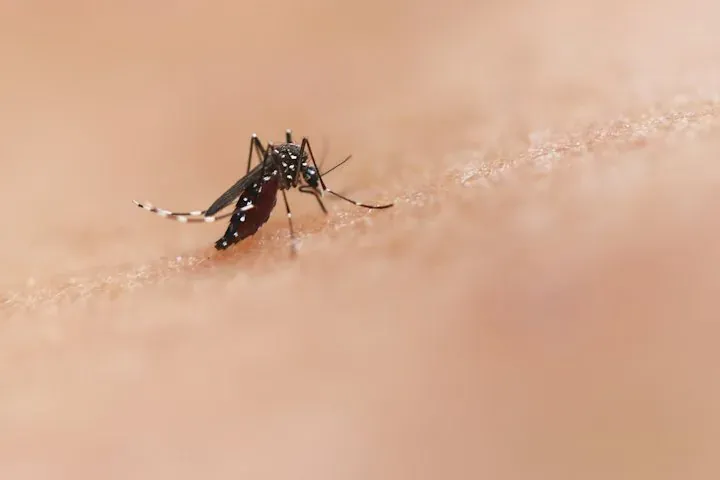
Life cycle
- Egg to adult usually takes about two weeks, and as little as four days for some species.
- Females can lay around 300 eggs at a time, in puddles, tanks, coolers and discarded containers.
- Adults start feeding within two days. Most males die within two weeks; females can live a month or more.
How they find and bite you
- They detect the carbon dioxide you breathe out, and are attracted to body odour and sweat.
- Most bite around sunrise and sunset, but the Asian tiger mosquito bites during the day.
- The itch comes from saliva injected while feeding, which stops your blood from clotting.
- Mosquitoes rest under tables and chairs and in shaded, dark corners.
Signs of mosquitoes
- More bites or buzzing indoors, especially around dawn and dusk.
- Larvae ("wrigglers") moving in standing water in containers, tanks or coolers.
- Mosquitoes resting under furniture, behind curtains and in dark corners.
- More activity after rain or near gardens and water features.
Where they hide
- Shaded, dark corners indoors: under beds, tables and behind curtains.
- Bathrooms and other damp rooms.
- Gardens, plants and shaded outdoor areas.
- Breeding sites: coolers, tanks, pots, trays, tyres and blocked gutters.
What attracts them or lets them in
- Standing water anywhere near the home, even a bottle cap’s worth.
- Open doors and windows without screens around dawn and dusk.
- Dense vegetation and shade close to the house.
How to prevent mosquitoes
- Empty and scrub containers, plant saucers and trays at least once a week.
- Cover water tanks and storage containers, and empty coolers when not in use.
- Clear blocked gutters and drains where water collects.
- Fit window and door screens, and repair holes in them.
- Use mosquito nets and repellents as directed on the product label.
When a professional assessment may help
- Mosquito numbers stay high after you have removed standing water.
- Breeding sites are on roofs, in drains or in areas you can’t reach.
- You manage a large garden, compound or housing society.
- There are dengue or malaria cases in your area and you want a source survey.
Did you know?
- A mosquito beats its wings 300 to 600 times a second, which is the buzz you hear.
- Mosquito-borne diseases such as dengue and malaria are not treated with antibiotics.