

Common species
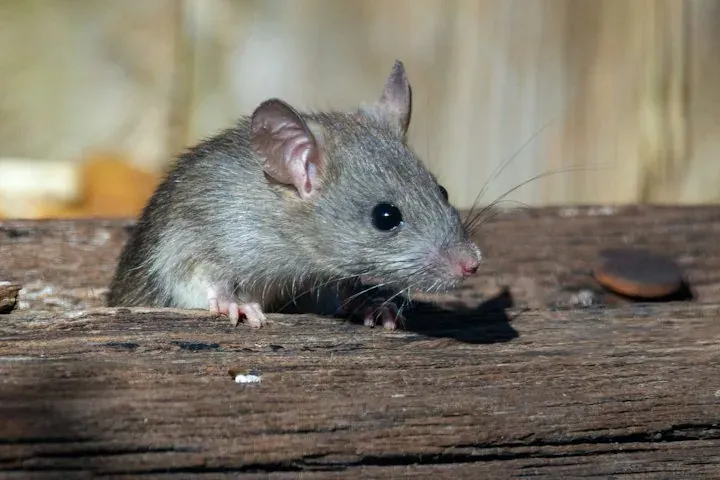
- House mouse (Mus musculus)
- Small (65–95 mm body), with a pointed snout, large round ears and a tail about as long as its body. Curious, agile, a good climber and swimmer, and mostly active at night.
- Roof rat (Rattus rattus)
- Also called the black or ship rat. Its tail is longer than its body. It prefers upper parts of buildings: false ceilings, lofts, trees and behind walls.
- Sewer or Norway rat (Rattus norvegicus)
- The brown rat. Up to 28 cm long and 140–500 g, with a tail shorter than head and body. Digs extensive burrows, often against a wall or structure.
- Greater bandicoot rat (Bandicota indica)
- Large and aggressive. Found around compounds, gardens and garbage bins. It can tunnel through brick and masonry, and its large burrows give it away.
- Lesser bandicoot rat (Bandicota bengalensis)
- The Indian mole rat, up to 40 cm including the tail. A serious pest of crops and gardens that also lives in village homes.
How rodents behave
- They see poorly, especially in daylight, so they run along walls instead of crossing open floors.
- Their senses of smell, touch and hearing are strong. Whiskers map their surroundings in detail.
- Rats are cautious and avoid new objects, while mice are curious and investigate them quickly.
- All rodents need three things: food, water and shelter. Control starts by denying them.
Signs of rats & mice
- Droppings along walls, in cupboards or near food. Mouse droppings are small; rat droppings are larger.
- Gnaw marks on food packaging, wood, plastic or wires.
- Scratching or scurrying sounds at night, often from ceilings or walls.
- Shredded paper, cloth or insulation used as nesting material.
- Greasy smudge marks along regular routes beside walls.
Where they hide
- False ceilings, lofts and wall cavities.
- Behind and under kitchen appliances and cupboards.
- Storage rooms, clutter and boxes left undisturbed.
- Drains, garden burrows and around garbage areas.
What attracts them or lets them in
- Food left out, open grain and pet food, and overflowing bins.
- Water from leaks, drains and pet bowls.
- Gaps around pipes, drains, doors and vents.
How to prevent rats & mice
- Store food, grain and pet food in sealed hard containers.
- Keep bins closed and clear waste regularly.
- Seal gaps around pipes and cables with suitable materials such as wire mesh or metal plates.
- Fit door sweeps and keep drain covers in place.
- Reduce clutter in storage areas so nests are easier to spot.
When a professional assessment may help
- You see rodents, or fresh droppings, repeatedly.
- Wires, pipes or stored goods are being gnawed.
- You hear activity in ceilings or walls you can’t reach.
- Traps or home measures haven’t solved the problem.
Did you know?
- A house mouse balances on its hind legs and tail while eating, a posture called "tripoding".
- Rodent activity is usually heaviest at night or very early in the morning.