

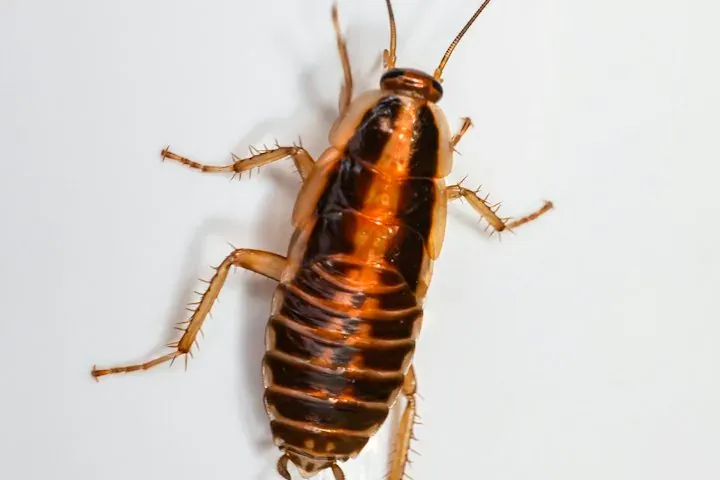
How cockroaches behave
- They are thigmotactic: they like solid surfaces touching their body, so they squeeze into tight cracks and crevices.
- They prefer sweet foods but will eat almost anything: oil, soap, wallpaper, toothpaste, book bindings, even shed hair.
- They can live for months without food and for weeks without water.
- They are mostly active at night and run for cover when lights come on.
Why they matter
- They carry germs and bacteria picked up from drains and garbage onto dishes and food.
- Their presence points to food, grease and hiding places in a kitchen.
Signs of cockroaches
- Cockroaches running for cover when you switch on a light at night.
- Small dark droppings, like pepper or coffee grounds, in cupboards and drawers.
- Brown, purse-shaped egg cases in corners and crevices.
- A lingering musty smell in kitchens or storage areas.
- Daytime sightings, which can suggest a larger population.
Where they hide
- Kitchen cabinets, hinges and under the sink.
- Behind and under the fridge, stove and other warm appliances.
- Drains, bathroom ducts and wet areas.
- Cracks in tiles, walls and furniture joints.
What attracts them or lets them in
- Food residue, grease, crumbs and dirty dishes left overnight.
- Leaking taps, damp cloths and standing water.
- Cardboard, clutter and gaps around pipes and drains.
How to prevent cockroaches
- Wipe counters and the stove, and wash dishes before bed.
- Store food in sealed containers and take out kitchen waste daily.
- Fix dripping taps and dry the sink area at night.
- Keep drain covers in place and seal gaps around pipes.
- Avoid storing cardboard boxes in kitchens and stores.
When a professional assessment may help
- You see cockroaches regularly, or during the day.
- They keep coming back after sprays or home baits.
- You find egg cases in several places.
- Activity is in areas you can’t clean or reach, such as inside appliances or ducts.
Did you know?
- Cockroaches have existed for millions of years, a sign of how adaptable and hard to control they are.